
 中文
中文 :English



2026
04-16
Complete analysis of stage lighting design in theaters
browse
144
— share —


[Scan the QR code with WeChat]


Complete analysis of stage lighting design in the theater
Stage lighting design is a component of theater architecture. Whether the treatment of each lighting position can be integrated into the theater design to form an excellent whole is a question that designers and architects must jointly consider
Due to the diverse forms of theaters, the arrangement of lighting positions varies accordingly. As a stage lighting designer, it is essential to achieve an excellent unity between form and content while satisfying the functional requirements of the stage.
two
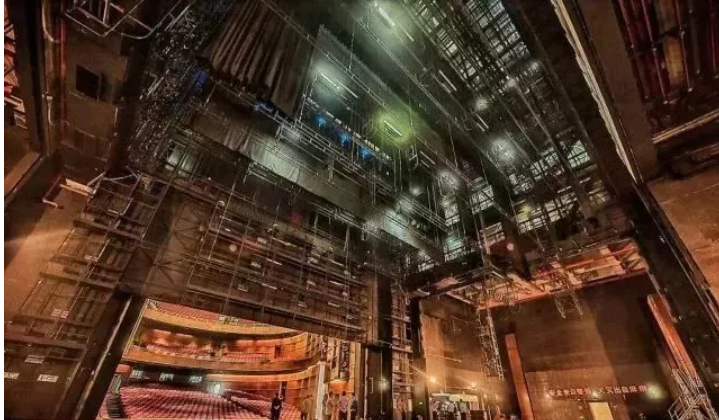
Actors are the main body of the performance, and their faces should be well illuminated when they are active in the main performance area. For lighting positions in the performance area, a horizontal elevation of 1.7m from the dance table (the height of the general human eye) is required as the lighting reference, known as the "effective lighting range".
three
According to the performance rules, the depth and function of the stage are divided as follows: the first one-third is the main performance area, the middle one-third is the secondary performance area, and the last one-third is the scenic area (background area). According to this law, the stage lighting positions also have basic division of labor for performance lighting: the outdoor lighting positions (face light, outer light) are mainly used for lighting the characters in the front and middle one-third of the stage space; The entrance lighting (entrance top light, entrance side light) is mainly used to illuminate the characters in the middle and back one-third of the stage space. This is only a general concept and commonly used spatial relationship, and does not imply that any performance uses space in this way. But as a stage lighting design, this factor should be taken seriously.
four
The design of each lighting position on the stage must ensure that there is enough installation space to accommodate a certain number of lamps according to the scale of the stage. Lighting fixtures have two spatial concepts of horizontal and vertical rotation, and the design of the installation space for lighting fixtures must consider both rotation factors (including the addition of color changers, shutters, and other accessories).
5
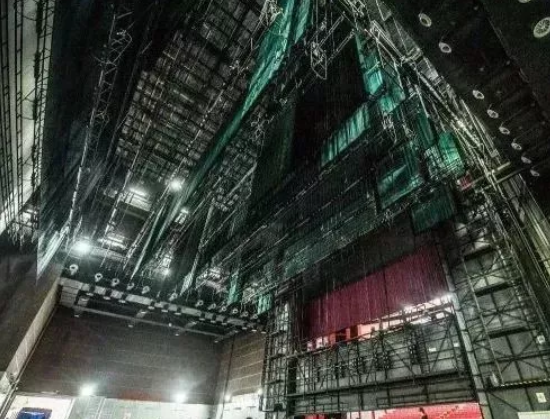
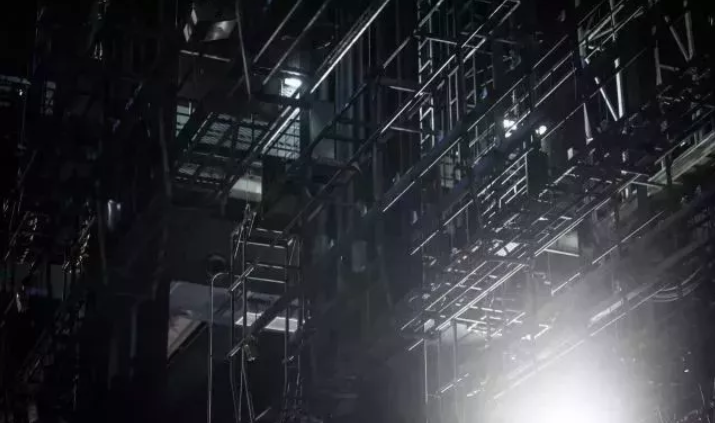
由于灯具种类繁多,且不断发展。各灯位灯具安装空间尽可能提供灵活可调结构。如采用固定结构,挂灯空间上下灯杆间距应不小于90cm,左右间距不小于70cm。挂灯杆应统一采用直径50 — 60mm无缝钢管。灯具应采用灯钩挂在圆杆上,并加保险链。
6
Except for situations where architectural or performance styles require exposure, lighting fixtures at each lighting position are generally installed in a concealed manner, so that the audience can hardly see the light source and its operation. The design of each lighting position aims to provide excellent working conditions, convenient pathways, and safety facilities for lighting operators during the installation, maintenance, and transportation of lighting equipment. To achieve professional stage lighting design and select suitable stage lighting equipment, it is crucial to first understand the stage lighting positions.